Why is identifying emotions important?
All of us experience emotions – they play a pivotal role in our lives. Some of us might find it difficult to describe (and thus manage)what they are when we are feeling them.
What are emotions?
Emotions are automatic, short-lived psychological reactions that can impact us physically and behaviourally. They can come up in response to something happening around us, like getting an unexpected email, or something happening within us, like remembering an awkward conversation.
Say we get a message from our manager asking, “Do you have a minute to chat?”. This could lead to feeling anxious – our heart might start to beat faster, and we might wonder whether we’ve done something wrong.
On the other hand, a mood tends to last longer and is often less intense. Even after we have that chat with our manager, we might still feel a little on edge as we get back to work. That lingering sense of unease is what we mean by a mood.
So, what is it that these emotions are actually telling us?
The messages within emotions
It can be helpful to think about emotions as little pieces of data. They can give us clues about what we enjoy and want more of, what matters to us, or when something feels uncomfortable or unsafe.
Sometimes, though, we might label certain emotions as ‘bad’ and try to push them down. Think of the last time you felt guilty about something. Maybe you shrank someone’s favourite jumper or forgot a friend’s birthday. You might have wanted to distract yourself or come up with an excuse, so you didn’t have to sit with that feeling.
However, it is important to ask what might the guilt be telling us? Perhaps we care about our friend and want them to know we were thinking of them. Once we’ve noticed that, we might decide to reach out, say we’re sorry we missed their birthday and put it in our calendar for next year.
So, when we notice that something feels off, how do we work out what we’re feeling in the first place?
How do we identify emotions?
If we aren’t used to identifying emotions, it can be hard to put a name to what we’re feeling. We might first notice a thought, like “No one is listening to me,” or a sensation in our body, like tightness in our chest. Both can give us clues about what we’re feeling. If we’ve just been interrupted, we might ask ourselves, “Am I frustrated? Am I hurt? Could it be a bit of both?”.
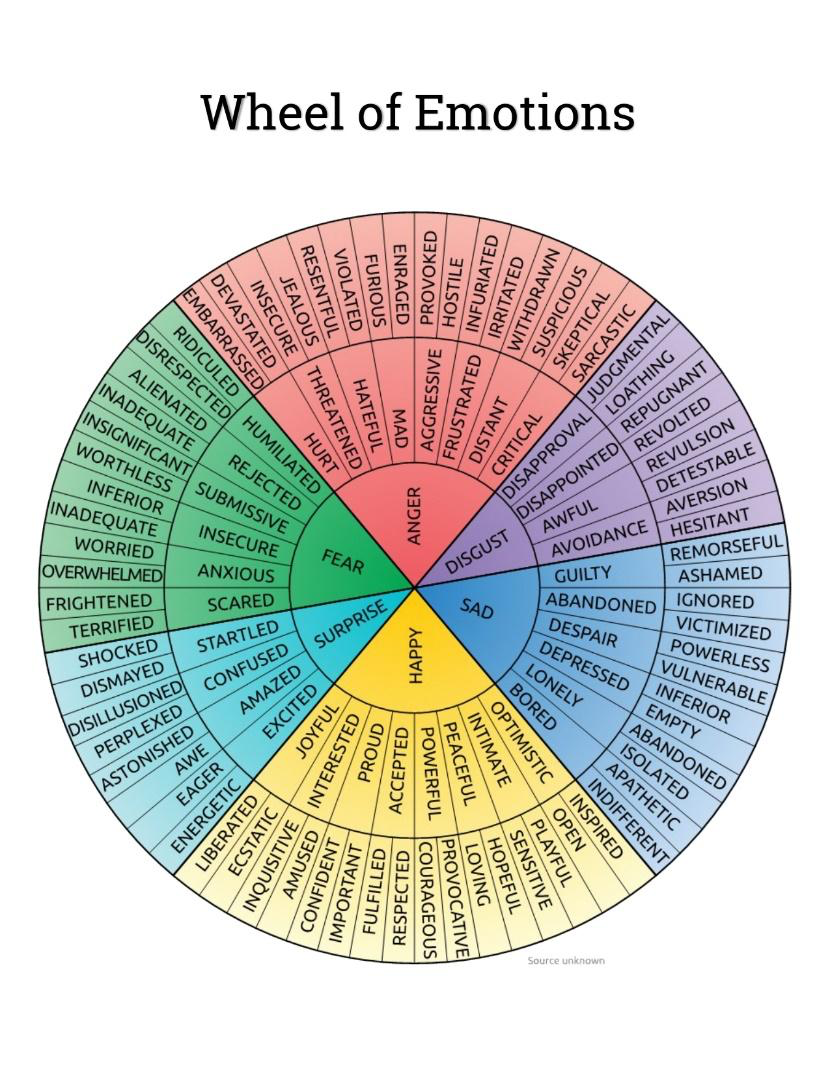
Psychologists can help guide you through this process, taking the time to show that there are often overlaps between our experiences and the various things that we feel. One example could be through using ‘emotion wheels’ to provide a set of vocabulary to highlight what we might be feeling (see image below).
Why might it be important to make this distinction and identify how we feel?
Say we notice we’re frustrated because we’ve been interrupted a few times. We might realise we want a chance to finish what we were saying. Or perhaps we’re hurt because we were sharing something important to us and wanted the other person to take it seriously.
Once we have a better sense of what we’re feeling, it can be easier to work out what we want to say and what we want to do. We might ask, “Can I finish what I was saying?”. Or we might let the other person know, “This is important to me, and I’d really like you to hear me out.”
In this sense, emotions allow us to communicate our needs. They allow us to understand what we want and what might be important to us, and to share this with both others and ourselves. Importantly, psychologists can help build on these conversations to highlight things like values or goals.
So, the next time something feels off, take a moment to ask ourselves, “What am I feeling?” Perhaps it’s frustration, hurt or a bit of both. Even a rough sense of what we’re feeling can give us a little piece of data about what matters to us and help us decide what we want to do next.
If you often find it hard to tell what you’re feeling, a psychologist can help you make sense of the clues you notice in everyday situations and find words for what you’re experiencing.
For more information, visit: